Writing a Believable Horse

This post originally appeared on my other blog March, 30, 2015. I have updated and added some information.

It’s probably J.R.R. Tolkien’s fault. Shadowfax and the exceptional horses of Rohan have made super-smart horses an important part of high fantasy. Even without an attempt on personification, horses also tend to be important features of any story lacking automation. How else do you get from point A to point B quickly? Did you have to look up how to cook a rabbit to write that one scene? Treat your transportation with the same care.
MVI_1851-001

Why do some book horses work really well, and others are like fingernails on chalkboard? There are a lots of reasons, of course. I will grant you, that there are readers who won’t notice your poor horsemanship. But, are you really satisfied with being sub par? Here are some tips for writing a believable horse:

1-Remember that horses are prey.

They like to eat grass and sometimes play. Their first instinct when something startles them is to put distance between them and the thing. Horses can be trained to think first, and can be taught not to react to scary things–like, you know, cannon fire–but it is taught, not inborn. That said, some horses are better suited to this than others.

This is also why war horses are so valuable.

2-Horses are athletes.

Think about human fitness for a moment, and that should put things in perspective. Top speed for the horse as a species is 45 mph. This is a very fast horse. A very fast horse in peak condition can probably do 45 mph for maybe three miles before needing to slow down.

That said, back in the day horses worked for a living, so chances are that most horses were fit.

Endurance racing is a thing, look it up to get a feel for the timing and pacing of urgent travel.

The pony express is a decently documented courier service if you need a model for king’s messengers getting around.

3-Gender matters.

When they filmed the first three Lord of the Rings movies they relied a lot on stallions. Shadowfax was played by two Andalusian stallions, Asfaloth was a different Andalusian stallion. And of course Aragorn’s horse, Brego, was played by a stallion. Most of the time this wasn’t a problem (though there was a reason there were two Shadowfaxes) but you know that scene at the Black Gate? One minute they are on horses, the next all the horses are gone and there is no explanation? That day, one of the cavalry mares was in heat and the stallions got downright dangerous. Now, on a film set, there is a lot of standing still. If there had been a lot of galloping, it probably would have been fine. But I laughed when watching the making of features on The Hobbit films, because there was not a stallion in sight on that set. Peter Jackson learned his lesson.

Historically, the Bedouins preferred mares as their war horses because the mares were quieter and less likely to give away surprise attacks. Stallions like the world to know they exist–especially other stallions. A well trained stallion can still be an excellent mount, and I imagine a world where horses work for a living would produce more good citizen stallions than this one does. (There are a few breeds more prone to gentle stallions than others, but on the whole they have a lot of testosterone and need to be very well trained to be safe. Most professional trainers advise extreme caution when handling stallions.)

That said, mares get close to geldings and then squeal. It’s a very annoying form of flirtation.

Geldings are neutered males. This is done to limit unwanted horse production, and to make the males more manageable. Granting that horses are individuals, geldings are extremely reliable creatures. These days, I’d take a gelding over a mare any day if I needed to sneak somewhere. I don’t think gelding was a thing in ancient times, though. If you are writing fantasy, you could argue they’ve developed it.

While we’re on the topic, baby horses are foals (not ponies). Girls (up to age 5) are fillies, boys (up to age 5) are colts. After that it’s mare and stallion or gelding. Ponies are horses under 14.2hh* but there are also pony breeds (see Shetland) and there are a couple small horse breeds (Icelandic Horses and miniature horses, for example) which are called horses. Exceptions make the rule, as they say.

4. On Whinnying. 

Movies love to make horses whinny. Horses don’t actually whinny often. See “prey” above.

Here are some circumstances when a domestic horse might whinny:

-The horse is alone and uncomfortable in unfamiliar territory and smells another horse.

-The horse is alone, approaching home more slowly than he wants and smells a stablemate (this is rare among horses who are accustomed to traveling alone).

-The horse is completely terrified and can’t get away (such as fire, or a fall).

-The horse has attachment issues to another being (probably a horse) and is separated from that being.

-The horse is home, but smells another horse coming and for some reason wants to say hi.

-Stallions making a statement, see below:

Here are some circumstances when a horse might squeal:

-Play fighting.

-Flirting.

-Real fighting.

Here are some circumstances when a horse might nicker:

-Dinnertime.

-Favorite being’s arrival or departure.

-Snacktime.

From what I’ve read, wild or formerly wild horses really don’t whinny ever. They take the world too seriously to risk attracting predators, I guess.

5-When you personify horses, think through just how sentient you want this creature.

Refer back to item 1, and set your ground rules. You can give your horse a completely human personality, but make sure you actually decide that. Disney/Pixar’s approach to the personified horse is usually to pretend the horse is a personified dog (see Maximus and Bullseye).

6-If you have not personified your horse, don’t personify your horse.

Yes, I know I describe Midas like a person when I talk about training.  He has a distinct personality, but he’s just a horse. He’s smart, knows and cares what I want him to do, and sometimes looks me straight in the eye and does the forbidden thing on purpose. Horses in real life are a lot like toddlers.

They gut react to strangers, they get antsy when they are bored or cooped up. But if they have a job, they love having a job to do. They also love being done with their job and free to do what they want. If they know you and trust you, they’ll be happy to be around you and more willing to do whatever you ask.

Horses recognize people, and remember events and feelings. They are excellent judges of people–for lack of a better descriptor, they pick up vibes from people and react accordingly. That said, a well trained horse isn’t going to be reacting hugely unless the person’s behavior sets them off.

Horses are problem solvers, some have developed this characteristic more than others. Some are hyper curious, some are super sociable, some are pranksters.

Some horses are braver than others.

7-Tack (horse equipment). 

Every part of the world has their own version of saddles and bridles. But in English they are called saddle and bridle. Bridles are for riding, halters are for handling on the ground. The rope for leading a horse is called lead rope. If you don’t have a halter, you can hobble a horse–IE use a rope or something similar to tie a horse’s forelegs together so the horse cannot go far or go fast. Cowboys, in particular, used hobbles.

Grooming essentials are a brush for dust/dirt, a curry comb of some sort to deal with crusted mud, and a hoof pick for cleaning out hooves.

Realistically, you probably don’t need to know much more than this unless you’re writing a period piece.

This is a saddle:

source

Saddles have stirrups for the rider’s feet, and a girth to hold them on. They have a pommel at the front, and the back is called a cantle. and the thing that hangs down between the stirrup and the horse is a flap.

This is a bridle:

source

A bridle usually holds a bit in the horse’s mouth, has reins attached, and is specifically for riding. The part that goes across the horse’s forehead is a browband, the part behind the ears is the crown, the part under the throat is the throat latch.

This is a halter:

source

Halters take many forms, some more simple than others, but the main thing is that it’s for handling the horse (or cow, or sheep, for that matter) from the ground.

Usually, a harness only refers to the trappings hitching a horse to a cart/plow/chariot:

source

8-Lameness.

It happens. A horse who is lame is called lame or off, a horse who is not lame is called sound. If, for the sake of plot, you need to deprive your hero of his mount there are a number of ways. Horse thieves are always an option. As are spook/bolts. Assuming your hero is not in a position to lose his horse thusly, or plot demands it for another reason, your horse could come up lame. The possibilities here are endless but here are a couple common options:

Lose a shoe. Unless your hero carries around special pliers for pulling off all the other shoes, your horse will be gimping along pathetically. This is a very fixable and temporary lameless, but it still makes the horse unridable until you can get it fixed.

Pick up a stone or get a stone bruise. This usually involves a stone being wedged by the shoe against the hoof and leaving a bruise. It can be an injury you walk off, of an injury you don’t recover from.

It happened to Black Beauty and made him fall on his face and dump his rider. I once had a horse step on stick–the stick actually impaled his hoof a little and I had to pull it out. He was lame for a few minutes and then walked it off. If we’d been galloping when he stepped on it, things would have been worse. Incidentally, hoof bruises are usually red.

Mystery reason. Heat/inflammation in the leg(s) plus lameness means something is wrong. The average horse owner today would have a list of guesses, but if your knight doesn’t have a local vet to call for a diagnosis, I wouldn’t worry too much about specifics.

Ever heard of cattle trops? These are devastating. It would be theoretically possible for a horse to live, but I find it unlikely that the horse would ever be sound again.

Pull a tendon or ligament. This is fairly serious and you probably retired that horse from the story–unless your story spans months and months and months.

Receive a wound in the saddle or girth area. This also probably retires the horse from the story as wounds take time to heal.

9-Age.

It takes 5 years for all the bones in a horse’s body to fuse. Age 8-18 is generally the prime of life. Some horses stay fit and healthy much longer. Some horses are overused early and burn out before age 8. I think the current oldest horse in the world is in his 50’s (happily retired in the UK).

Granting the variety of personalities in the world, young horses in general tend to be higher energy, prone to forget their lessons, and get bored easily. They are even more prone to doing silly or stupid things than horses in general. Some horses stay this way forever, but most gain wisdom with age.

There was one memorable spring day a few years ago when all the horses were high as kites–the colts especially–except the 30+ year old Shetland pony who just watched them all the way Yoda watches Luke Skywalker.

10-Ponies.

Ponies are the best things ever. They are not young horses, they are simply small. They are very clever. Much more clever than your average horse most of the time. They also tend to know they are clever, and know they are cute, and are openly willing to use those traits against you. But they are still the best ever. Hardy, long lived, sturdy. A few small breeds are still strong enough to carry a grown man. Not all breeds can carry grown men.

11. Loyalty.

Horses are reasonably loyal, but they are not dogs. They are prey. When a horse spooks its brain turns off and the horse gets the hell out of Dodge. Later on the horse will realize that it had a rider once, and now the rider is gone and they aren’t sure where they parted company. Horses live their life in circles (read up on Monty Roberts if you’re curious) so chances are they will eventually circle back to their rider. Unless they know their way home. Though, they are lazy, if they didn’t go far, they probably won’t go far. A good rider can usually stop a bolt right when it starts, it’s a bit harder to stop once a horse is fully underway, but it is still possible to regain control.

Now that I’ve said that: There are always exceptional horses. There are always exceptional bonds. There are always miracles. I read a story about a horse who charged a bear with its rider to save another horse and rider (go read that story, it’s a great example of horses and riders in a scary situation). I’ve read about horses staying with fallen riders and taking them to the nearest house where they could get help.  I’ve experienced a bolting horse stopping for a traffic signal when she was in sight of the barn and had no horse reason to stop (on a related note: God answers prayers).

Don’t be afraid to have exceptional horses, bonds, and miracles, but be aware that they are exceptional.

12. Gaits.

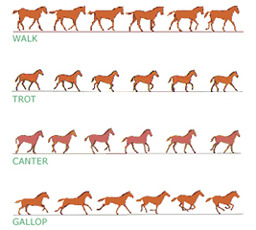
Most travel will be done at walk, and trot. Trot is a two beat gait which can be quite bumpy, the rider sits or posts (a sort of controlled rise and fall of the rear) the trot. If the rider is riding bareback, he’s sitting the trot and it’s probably not comfy unless he’s a really good rider or riding a really smooth horse.

Canter or lope is next on the speed scale, and then of course we all know gallop.

There is such a thing was a gaited horse–this is a horse with an extra gait, which is some form of running walk. There are different names for the different cadences of running walks, but one foot is always on the ground. This is an exceptionally smooth riding experience, and it looks weird. Just google “single footing horses” and you’ll see what I mean. Someone like a circuit rider or traveling monk would love it if you gave them a gaited horse to ride. These horses are ideal for long distance traveling. They are not ideal for knights unless he’s rich enough to have a separate charger.
source

13. Terms. 

If you’ve made it this far through the post you’ve probably learned or googled all the terms you really need to know. More than this, and you’re just flaunting to your reader that you’ve done research.

Unless: 

You are writing a period piece, in which case I encourage you to look up the names of the gear used in that time period. Just to give you incentive: If your piece is before the Mongols, no one had stirrups. The Romans had shoes, not stirrups.

You are writing a horse story. In which case I strongly recommend spending seriously huge amounts of time around horses and horse trainers. The more the merrier. And read The Black Stallion and every single Marguerite Henry book you can get your hands on. Also read the equine encyclopedia. 

You are writing a character who would know such things (such as a horse trainer, a groom, a horse enthusiast-even just a racehorse owner).  In that case, read up on the particular sport or discipline, or what life was like for horses in a comparable time period (if you’re writing fantasy).

Plot. If you need the carriage to break down, wouldn’t hurt to learn what the parts of a carriage are called. If someone poisons the queen’s favorite horse, it would be important for you learn more about how much of what kind of sick a horse can actually take.

Happy writing!

The Dark Knight Rises

Note: This post originally appeared 8/16/2012 on my other blog. 

This brings us to The Dark Knight Rises. Spoiler Alert. Just in case you still haven’t seen the movie. Though, it’s been out so long that all plot points are fair game.

A perceptive youtuber made this Batman trilogy supertrailer with a voiceover from the Prestige (conveniently, it’s Michael Caine’s voice, who you hear as Alfred): And truly, if Nolan had to do major re-thinking of his trilogy after the death of Heath Ledger, the story did not suffer. Dark Knight mostly stood on its own, even though it built on the foundation of Batman Begins. TDKR, however, really relied heavily on the prequels and in a sense knit them together into a complete whole.


I was completely torn about going to see TDKR, but had to since I’d seen TDK. I kept comforting myself that I would get to see Anne Hathaway as Catwoman (and she did an excellent job).

I’m glad I went–though I was wound very tight until about halfway through the movie when I realized it wasn’t going the direction I thought it would. The last act of the trilogy, the prestige, itself has three acts, the descent, the pit, and the rise.
Act 1:
Ra’s al Ghul: You used all the tools I taught you… for a city that was corrupt, and a victory based on a lie. Now your failure will be seen…

TDKR takes place 8 years after TDK. 8 years of the noble lie cleaning up Gotham’s streets and tortuing Gordon’s soul, and Bruce Wayne holing up like a hermit in Wayne Manor (rebuilt after the ashes of Batman Begins!) while nursing his (physical and emotional) injuries from his fall in TDK.

Bruce and Gordon are struggling with the effects of their big fat noble lie. Bruce still thinks it was a good idea–but he is definitely not facing his pain about Rachel’s death, Dent’s fall, and Batman’s scapegoat status. He’s driving Alfred crazy. I don’t think Alfred can quite decide what a healthy Bruce would look like, but he knows that what he’s looking at is not it. By the way, even Alfred told a lie at the end of TDK, and he regrets that he hid Rachel’s choice from Bruce (she chose Dent). Alfred’s chief fear is that Bruce is not interested in living.

The only glimmer of life in Bruce’s eyes comes from Selina Kyle–the Catwoman. He catches her breaking into a safe in his house and is clearly intrigued by her. He sees something to her that most don’t. She’s a catthief with emotional issues that make her a little more complicated than others. He puzzles her a bit, too. That stupidly rich (but, admittedly handsome once he cleaned up) hermit who didn’t turn her in to the police but was fully capable of tracking her down himself.

Alfred: [about Selina Kyle] You two should exchange notes over coffee.

Bruce Wayne: So now you’re trying to set me up with a jewel thief?
Alfred: At this point, I’d set you up with a chimpanzee if it’d brought you back to the world!

The spark brought by both Selina and the mysterious person she is working for fans into flame when Bane shows up. Bruce is glad of the chance to be Batman again. He rather blithely steps back into the cowl (against Alfred’s wishes, see “not interested in living” above) with little preparation and walks right into the first villain who is physically stronger than Batman. Batman is promptly defeated and sent to hell. Bane’s definition of hell is a place that holds out a little thread of false hope–leaving you to hope and have your hopes dashed again and again because there really is no way out.
Act 2:
Bruce Wayne: Why didn’t you just… kill me?

Bane: You don’t fear death… You welcome it. Your punishment must be more severe.
Living in hell isn’t on Bruce’s list of things to do. He wants to die, but has a deep inner obligation to die fighting. Bruce talks in circles with a doctor who has lived in the pit for years. The doctor helps fix Bruce’s back, but also gets him to admit that he doesn’t fear death, and that’s part of his problem. There is a difference between risking your life for someone and wanting to live, and risking your life for someone and wanting to die. You’re much more likely to fail when you don’t desire life enough to try harder than you think you can (see chapter 10 of The Horse and His Boy by C.S. Lewis). When Bruce realizes that he has to let go of his martyr complex, his deathwish, and the idea that he’s irrepairbly broken (body and soul), then he has what it takes to rise from the pit. He had to let go of failure, of Dent, of Rachel, of his parents’ murder, and do what Alfred had been trying to get him to do: embrace life.
Act 3:
Bane: So, you came back to die with your city.
Batman: No. I came back to stop you.

Bruce Wayne, back from the dead, once again fit and filled with new zeal, makes his way back to Gotham–back to the world. In many ways, the pit was the only thing that brought Batman back and made Batman the legend he was meant to be. While he was gone Bane ruthlessly undid the noble lie as part of his undoing of Gotham–he tore down the white knight who was their shining example and used that as justification for the Reign of Terror. It was hard not to watch Bane’s rule without thinking of the French Revolution. Anyone who could be deemed a “have” was evil and overrun by anyone who could be deemed a “have not.” To have was to be evil, unless of course you were a have not three seconds ago. Hate to get into politics, but it also bears resemblance to a certain movement whose main complaint is that some people have more than they do (but they are unwilling to share their ipads with the homeless guys who don’t have ipads).   Bane: We take Gotham from the corrupt! The rich! The oppressors of generations who have kept you down with myths of opportunity, and we give it back to you… the people. Gotham is yours. None shall interfere. Do as you please. Start by storming Blackgate, and freeing the oppressed! Step forward those who would serve. For and army will be raised. The powerful will be ripped from their decadent nests, and cast out into the cold world that we know and endure. Courts will be convened. Spoils will be enjoyed. Blood will be shed. The police will survive, as they learn to serve true justice. This great city… it will endure. Gotham will survive!

This is the lie Bane feeds the people to encourage them to destroy themselves and descend into chaos. Gotham does descend. There is a moral group that struggles to get by keeping its head down–the police force has been trapped in the train system underground and has done nothing but count the days till they can get out to reckon with the escapees from Arkam. Oh yeah, and there is a deteriorating nuclear-type-bomb rolling through the streets, which will eventually go off after a period of Bane’s torturous false hope.

To all this madness returns the Batman–more a man than he has ever been before. He finds his allies, makes allies out of others–namely Selina Kyle–and sets about systematically warring against Bane. Catwoman joins forces with Batman because Bane’s Gotham was never something she wanted.  She’s also kinda stuck on the guy who has displayed unprecedented forgiveness and faith in her (perhaps the film could have been the Redemption of Selina Kyle). Plus, she’s definitely a girl more his speed than any others he’s had in his life.

In the end, it’s a pretty awesome climax. A fitting end for Batman’s journey that started when his parents were murdered in a dark alley. He has finally found himself, and only now could he truly sacrifice himself for Gotham.

Batman: A hero can be anyone. Even a man doing something as simple and reassuring as putting a coat around a little boy’s shoulders to let him know that the world hadn’t ended.

Jim Gordon: Bruce Wayne?
Others have commented that TDKR was not as realistic as TDK, and I would agree. The plot has a few more fantastical elements that require suspension of disbelief–or require you to remember that this is actually a comic book movie.
It’s also interesting to note that the passage read at a certain key funeral at the end of the film is from Dicken’s A Tale of Two Cities, (a story set during the Reign of Terror, incidentally). The passage is from Sydney Carton’s final words before he goes to the guillotine in place of Darney (the man loved by the woman Sydney Carton loves).
I see a beautiful city and a brilliant people rising from this abyss. I see the lives for which I lay down my life, peaceful, useful, prosperous and happy. I see that I hold a sanctuary in their hearts, and in the hearts of their descendants, generations hence. It is a far, far better thing that I do, than I have ever done; it is a far, far better rest that I go to, than I have ever known.

I’m growing to love this movie, actually. It’s a nuanced and rich story, with many themes, many good points, and many quotes. It’s not heavy handed, it’s a story that speaks for itself. I’m hesitant to really give away the ending, even though most folks have seen it by now. Suffice to say that I was happy. Gotham has the hero it needs, and Bruce Wayne has finally found peace.

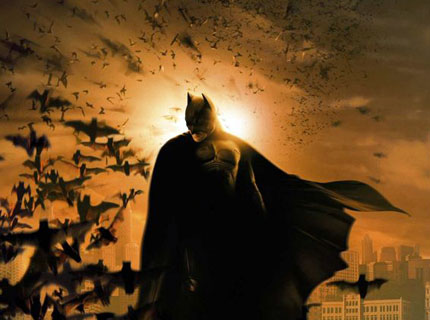
The Dark Knight

via

Note: This post originally appeared August 1, 2012 on my other blog. 

Four years ago, when they were promoting The Dark Knight, I decided that I probably didn’t want to see it because I didn’t want to see the Joker.

The Joker is one of the best Batman villains, and my favorite Joker of all time is the one from the Batman/Superman Adventures voiced by Mark Hamil (you might remember him better as Luke Skywalker). Having seen Tim Burton’s Joker, I knew that the mad clown wasn’t nearly as fun when translated to the live action world–he was probably one of the scariest villians possible, and the Joker of Nolan’s gritty Gotham was undoubtedly the most terrifying villain ever. The Joker of the animated series was after two things; money, and besting “Bats”–the Joker of TDK was after one thing; pushing Batman over the edge. After the untimely death of Heath Ledger I was even less interested in plumbing the depths of evil with the Dark Knight.

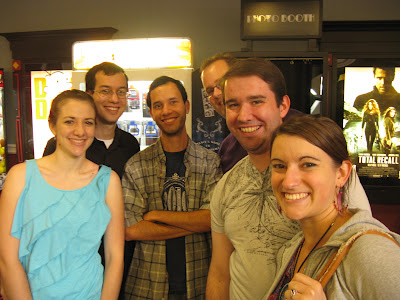
in line for the Dark Knight Rises

Every now and then Zorro would tell me that TDK was one of the best done films he had ever seen, but it was a hard film to watch. I would agree with him (having known all the major plot points and twists since it was released) and that was that. As everything built up to the release of The Dark Knight Rises my curiousity got the better of me and on TDKR’s opening day I finally watched The Dark Knight. I’m glad I did. I’m also glad that it was 4 years before my morbid curiousity got the better of me! At least I could watch TDKR shortly after seeing TDK.

Why? Because I didn’t like the end of TDK.

It’s a rough film that explores themes of good, evil, and how far good should go to stop evil. Batman is faced with a villain with no backstory, no identity, and no motivation except to destroy Batman from the inside. Why? Sounded like fun. That’s all. Just wants to see the world burn. The Joker is not mad–not at all–he’s just evil. The Joker believes that deep down, each person is just like him. The frightening thing is that he’s right. The Christianese for it is “sin nature”–the translation is “nobody’s perfect.” Harvey Dent, the White Knight, Gotham’s hope–Bruce Wayne’s hope–proved Joker’s point with resounding consequences. Dent–representing “the best of us”–gave in to the temptation of the power of evil, the power of no checks and no rules. He hung onto his two headed coin as a sort of blankie, a way to say it was’t not his fault–life is all pure chance so why shouldn’t he do what he likes? He set out to punish the world for what he lost–but only if the coin dictated their death. He sought to relieve his own pain by inflicting it on others. He gave himself to the evil inside him and became Two-Face.

Joker won the battle for Harvey Dent, however, the people of Gotham and Batman prove that even if evil is tempting, we do have a choice. We can choose not to be like the Joker or like Two-Face. Joker tries to goad Batman into breaking his rules and killing him, he tries to goad the refugees and inmates on two ferries into blowing each other up to save themselves. But they don’t. They almost do. They want to. But when it comes down to doing the deed they don’t.

After the people of Gotham prove themselves, and Batman finally succeeds in capturing the Joker, there is still the problem of Two-Face Dent on his revenge-driven killing spree. Batman and Commissioner Gordon have been struggling to keep Harvey Dent’s nose clean since Joker upped the anti in Gotham (a fact that probably should have tipped them off that maybe he’s not the White Knight they thought). They desperately want him to be what they believe they can’t–a shining example of good for the people of Gotham to aspire to. Consequently, they do everything possible to save Harvey Dent’s image from the mire he plunged it into. Batman heroically takes the blame for Harvey’s sins. A lot of people really loved the symbolism of Batman’s sacrifice–but I didn’t. Yes, taking Harvey’s place was noble, but it required a pretty dang huge lie. Noble lies have a way of going wrong. The effects of this noble lie nearly cost Bruce Wayne his life.

Batman Begins

Note: This post originally appeared 7/27/12 on my other blog.

I’ve been trying to organize all my thoughts about the Batman trilogy into a post. Once I got thinking about it, there got to be a lot of thoughts. I originally thought that I’d just put it up in one massive post and you could read or not read. The trouble is that it’s taken me days and days to write and at the moment I’m just getting to The Dark Knight Rises. So I decided to post my thoughts on the Batman Trilogy in portions…if you don’t like Batman you might be a little bored here for a couple days, but maybe you should read the posts anyway because it’s a good story, even if superheroes aren’t your thing.

source

Every iteration of a superhero is different, the comic books, animated series, and live action versions always take different spins on the same icon and often the same story arcs. Then, of course there are the re-boots of this, that, and the other. The fundamentals stay the same–superheroes and their remakes will probably never go away because they are the modern myth. They provide a vehicle for exporing all sorts of themes, philosophies, and moral connundrums in compelling ways. Every society needs heroes, needs myths, needs someone to tell stories about. Once upon a time they told stories about gods and goddesses or rediculously mighty warriors like Beowulf. Today we have a lot of mutants, a bunch of aliens, and a few geniuses with suits.

Batman has always been one of my absolute favorite superheroes. He has no superpowers. In the words of the Justice League of America Batman, “I’m just a rich kid with emotional problems,” but he’s the one all the other superheroes look to when they’re in trouble. Dry wit, cool gadgets, heartbreaking past, devoted butler…what’s not to like? Batman is a hero so commited to protecting and caring for Gotham that he’s left the Justice League a couple times. (They just need his help all the time so he’s back a lot :-P)

Batman Begins

I thoroughly enjoyed Batman Begins when it came out–what, 7 years ago?–I thought the exploration of how Bruce Wayne might become Batman in a realistic world was fabulous. (I also haven’t watched the movie in a long time because my tastes shifted away from dark blurry action flicks). This excellent review of the trilogy as a whole points out how Batman, rather than battling aliens or mutants, is battling the “good guys” to save his bad city–this is both gripping and frustrating. Frustrating because it is hard to watch someone so good give up so much for something that doesn’t deserve him. Gripping because it resonates with something deep down inside–it hearkens back to the redeeming love in the greatest story ever told. I commented after seeing TDKR that I was glad that Gotham got more…save-worthy…as the movies went on. Then I thought about later and realized that while, yes, Gotham’s progression toward good was right, proper, and praiseworthy, the fact that Batman would have kept fighting for Gotham regardless was also right, proper, and praiseworthy. More so, in fact, because it was unconditional love.

How dabbling in movie making changed how I watch movies.

This post originally appeared on 8/22/2015 on my other blog.

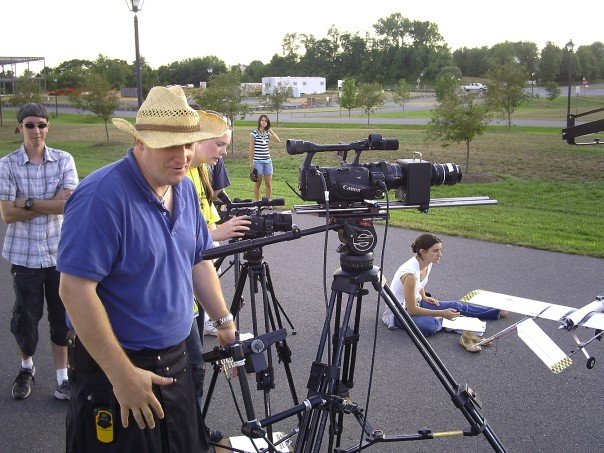
I worked on an independent film once. I even got paid. Before that I’d volunteered on some productions and also been very involved in my college’s film club. I still miss the acting and writing–even the costume design–and think about ways to get back into it.

However, this post isn’t about that.

The summer between my Junior and Senior year I worked as a Script Supervisor on an indi production. (I even have a page on IMDB. It’s basically nothing but my name…but hey, it’s there.) Between that and some experiences writing and working on student films, I don’t watch movies the way other people do.

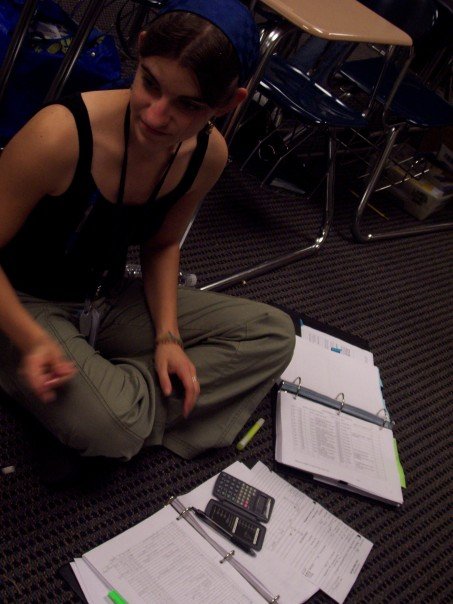
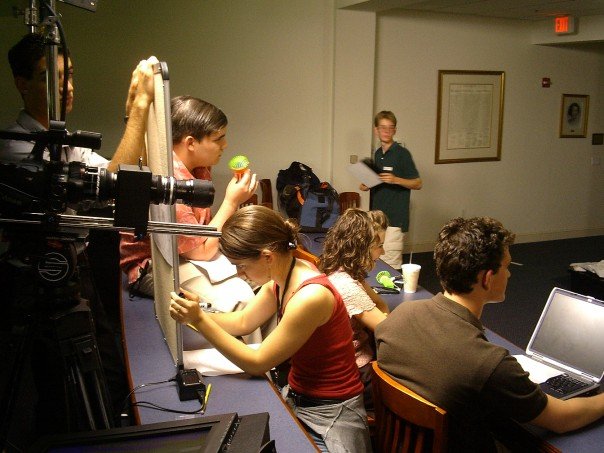
I’m the person hunched over a pile of papers

I learned a lot that summer. I can’t say I’m running to L.A. to be a script supervisor, but it was a good experience. There is usually one “scripty” per film–sometimes two if there is a second unit. The scripty is the right side of the director’s brain. I was responsible for keeping track of each and every shot the director wanted, and making sure he got each shot he wanted. I was responsible for recording the technical details for each shot (like, the lens, the zoom, the height of the camera, its distance from the object, etc) and also the time stamp of each take (we didn’t have a real digital clapper). I was also responsible for continuity photos (pictures taken of the set before and after a take). Was the glass half full, or three quarters full at that particular spot on the actor’s line?

Yeah. Mind boggling details. You have all caught mistakes in movies. Forgive the scripty, please.

The nice thing was that I was the only person who got to tell the director what to do. The bad thing was that there was only one of me so I had to be on set the entire time. I could only take a break if everyone was.

running through my camera logs

Let’s just say chocolate covered espresso beans were essential to my lucidity. Buckets of vitamins and supplements are probably the only reason I didn’t die of the plague halfway through production.

In the film club I wrote, directed, produced, and acted. (I like the writing and acting best). My senior year I also tried my hand at writing an adaptation (book to radio drama). My entire view of movie-making and the book-to-movie process changed.

-As an art, movie making is collaborative. One person can wear many hats, but most of the time you need a lot of people from just about every skill-set you can imagine; attorney, accountant, business manager, mastermind, artist, writer, carpenter, make up artist, talent scout, actor, camera man, lighting specialist, event planner, caterer…the list only goes on. Artists often dream of the silver screen, but I wonder how many business managers set out to navigate the massively risky and varied waters of movie production?

low budget teleprompter

Movies are stressful. There is a lot on the line, and there are a lot of artsy people trying to share a vision. This is why chains of command are wildly important.

Movies fail for thousands of reasons. Movies succeed for thousands of reasons. Most movies don’t pay for themselves and studios are kept afloat by the blockbusters than knock it out of the park.

Every film shoots a lot of scenes that will not make it into the movie. The extras on the DVD? Just a sampling. Most of them are cut for a good reason. Some are cut just for time constraints. You wouldn’t believe what we do for time constraints.

Timing is everything. The Wizard of Oz and The Princess Bride bombed in the box office. They became cult classics after they were released on home video. The TV show Firefly is another example of late blooming success.

Adaptations are freaking hard to do. When I watch a movie that came from a book, I judge it as a two hour summary of a 300 page book. I do not judge the movie by the book, nor the book by the movie. The only exception to this is The Princess Bride. Having seen the movie and read the book, I can say I love both for basically the same reasons.

Medium matters, pacing and suspense techniques that work in the book will necessarily look different when translated to a visual production.

Part of what makes adaptations so hard is the perspective of the book–IE, the first person limited knowledge of The Hunger Games posed an extreme challenge to the film makers. They probably could have made a better movie (or one that conveyed more of the facts of the story) if they had treated it more like a third person omniscient. I think they figured that out and the rest of the films in the series were much better. I think I may even prefer them to the books. Most stories are written in limited omniscient or first person, and most movies are told in omniscient or limited omniscient. However, you can get a heck of a lot more detail and character development in a book than you can in a movie. Witness the 6 hour BBC Pride and Prejudice vs. the 2 hour Focus Features Pride and Prejudice. I think both films are excellent adaptations given the time restraints.

Yes, movie making is a ton of fun. Most people do it because they like it. Despite the crazy-go-nuts hours and conditions. Believe me, the crew doesn’t do it for the money.

Basically, having an understanding of how it’s done, how much money things cost, and how much effort goes into a production, I have a lot more grace for the movies I watch. That doesn’t mean that I think they should get away with laziness or sloppiness or weak stories…it just means that I get it.