Remember that love affair with birds? Still going strong.
One of my favorite visitors to the bird feeder (though, lets be honest: almost
everything is my favorite so long as it isn’t the squirrel) is the chickadee. I
remember watching them at bird feeders in touristy locations—they were the only
birds brazen enough to brave the proximity of the crowds. Sparrows are pretty
brazen, too, but they spend their time under picnic tables rather than feeders.
My feeder is dominated by house finches and cardinals, but I
do have goldfinches, titmice, and chickadees…and in the wintertime I see juncos
regularly.
This spring blue jays and starlings started hanging around
more, and I’ve noticed more robins in the front yard.
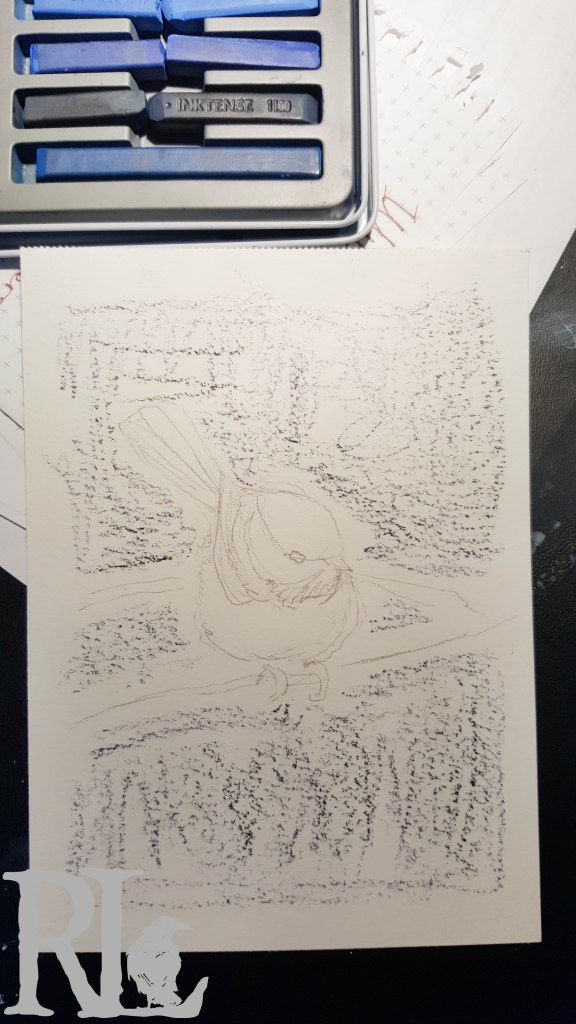
A sketch, and Inktense scribbles in blue and purple.
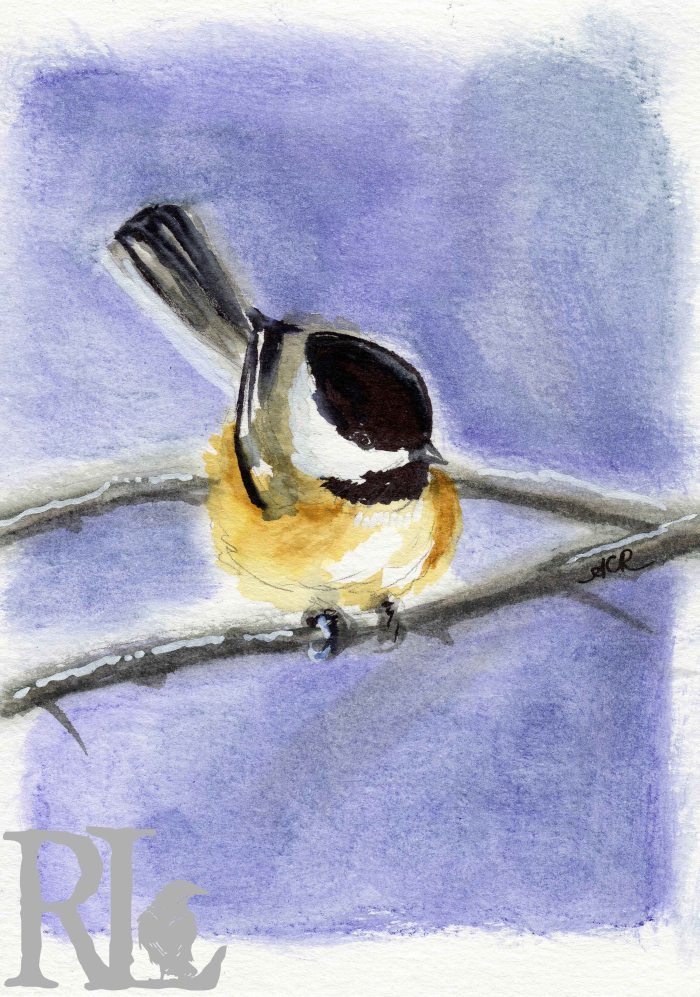
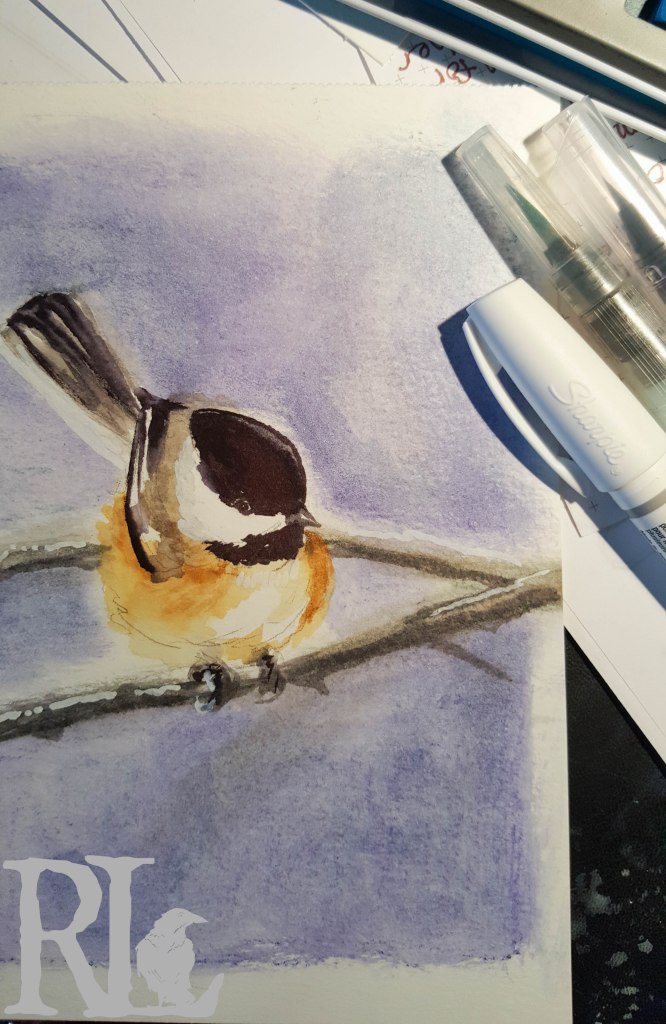
It had been a while since I’d noticed a chickadee, and one
came and sat on a branch quite close to the deck doors—I was surprised that I
had forgotten just how tiny chickadees are. I mean, I could probably fit 2 of
them on the palm of my hand if they were so inclined.
Such a loud voice and big personality in such an incredibly
tiny body—specially compared to the other song birds I’d gotten used to seeing.
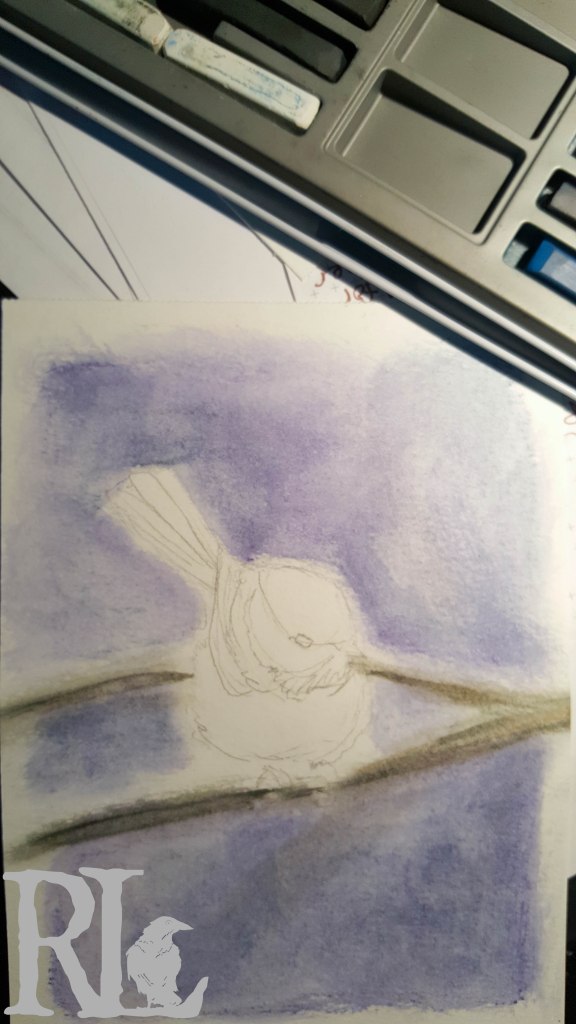
Blending with a wet paper towel.
I painted this charmer for my mother as a mother’s day gift.
I’m so very pleased with out it came out. #firsttry
Brushing in the branch.
I’d been experimenting for a while with inktense blended
backgrounds, and had a really solid idea in my head of how to use the brush
pens. I guess it shows. Inktense is such a versatile and sometimes befuddling medium.
You’ll be seeing more of it in the coming weeks.
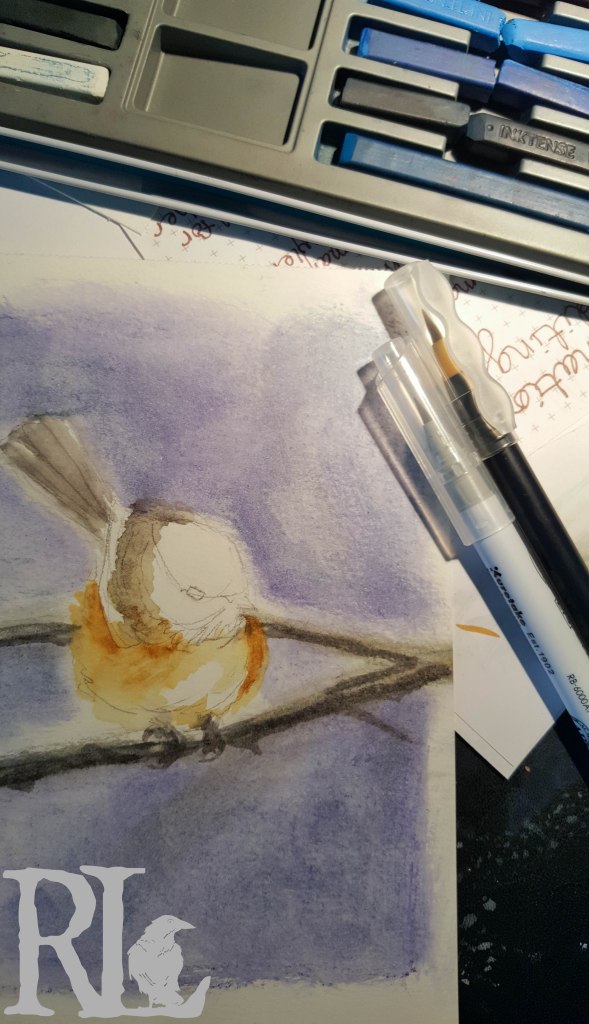
Brush pen, already a little blended. Drying before adding the black.
Have I mentioned that I love the brush pens? Love them. I
love putting the color where I want it deepest and then coaxing it out further.
All blacked! And some sharpie paint pen highlights for the branches and white patches.
I still adore my Daniel Smith watercolors—I’ve developed an affinity for their particular granulation and vividness. I’ve been using them so much I’d forgotten just how special they were. My past weeks challenging myself with artist’s loft supplies have been…eye opening…and challenging. So, successful? You’ll be seeing some of that practice, soon.
Prints of the chickadee are in my Etsy shop, if anyone is interested. Just have 5×7 up there now, but 8×10 could be arranged!
Processing…
Success! You're on the list.
Whoops! There was an error and we couldn't process your subscription. Please reload the page and try again.
One would think that with Disney’s The Jungle Book being a
big part of my childhood, I might like tigers less. Shere Khan was only one of
the most scary villains—though, simultaneously one of the most…noble? Not that hunting
a child is noble, but his motivation was less self-serving than say, Scar’s. Actually,
come to think of it…big cats are these terrifying, massively dangerous wild
beasts…but it’s just hard not to like them.
Especially when big cats apparently have the same inability
to resist cardboard boxes that their domestic cousins have and they are also
openly fond of basking in the sun.
When I was a kid, I had this little plastic tiger cub who
was classically named—Stripe. My brother had the same tiger, except white, and
named Ghost Tiger—but we called him GT for short. Very creative names!
Tigers are very hard to paint, incidentally. I’ve really
struggled to capture their bone structure. For some reason the leopard comes
easier—perhaps because the leopard is more sleek?
I don’t have any childhood leopard memories, I think I might
have had a plastic leopard at one point, but it was not as important a toy as
Stripe.
I want to paint a series of big cats, glamourous big cats
like these—and also more comedic big cats. Big Cats in Little Boxes, sounds fun
and challenging!
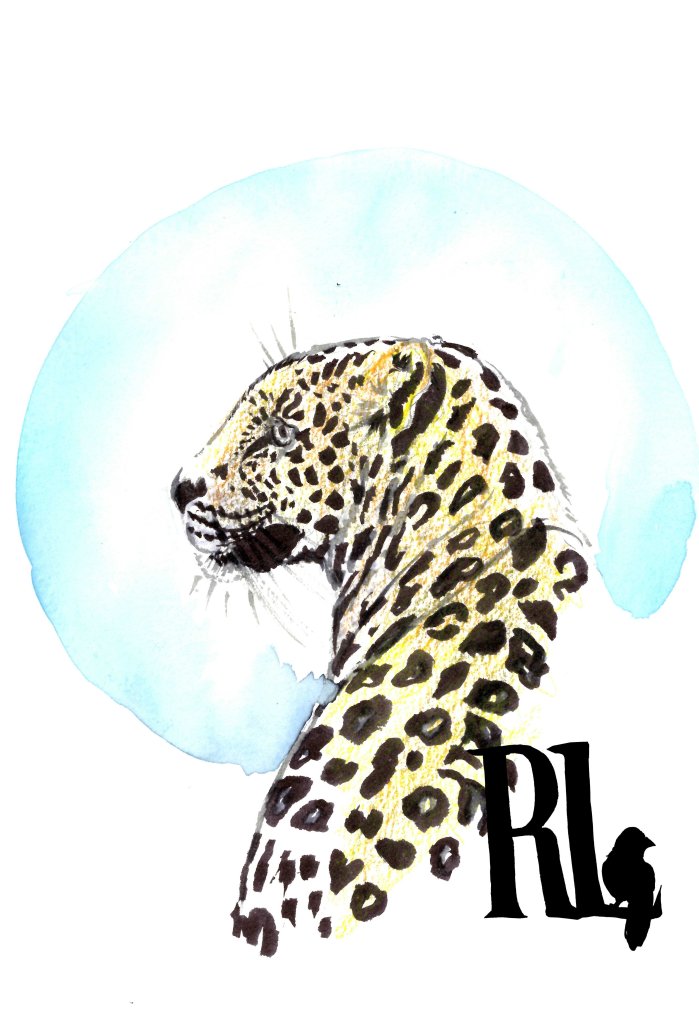
Glamour Leopard is Glamorous
I have a hard time cartooning from scratch—but I’m trying to learn. I spent so much of my life wishing I could draw photo-realistic things that it’s been a huge mindset shift to accept that my strength lies elsewhere. It’s not that I can’t be photo-realistic, but the pieces that really shine with emotion and are fun to look at aren’t those. I’m better at whimsy, and better at evocative. And I’m finding that I like artwork that looks like art. Especially with so many amazing photographers out there, I don’t feel the need to duplicate their work, I’ll make it something new.
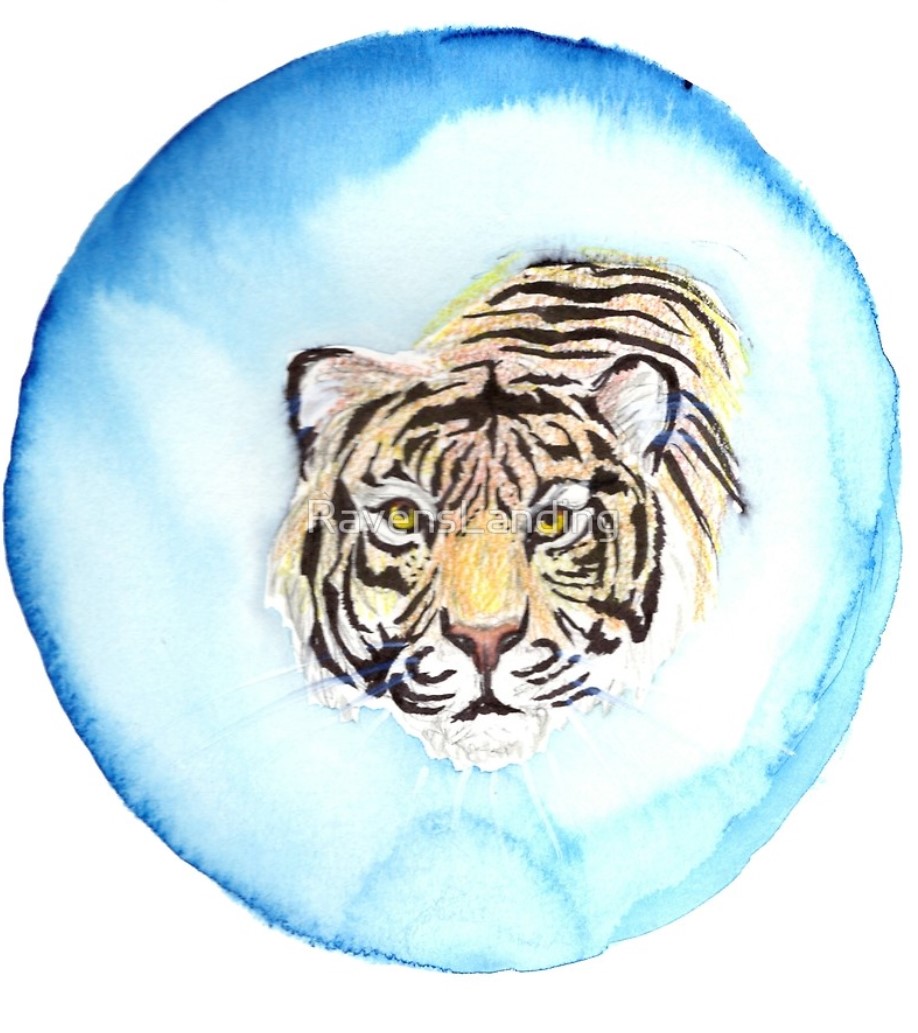
Both of these cats are done in colored pencil, over a watercolor background and inked blacks. They are both up in Redbubble, I haven’t put them in my Etsy shop yet, though. Do you think I should?
Processing…
Success! You're on the list.
Whoops! There was an error and we couldn't process your subscription. Please reload the page and try again.
We had a few good weeks of steady progress in May. I had,
this spring, but some focus on mounting block etiquette, expanding previous
training to include “mounting from anything that might work” out and about.
Last winter was rough on the trees, so there are a number of little wood piles
here and there about the property, and I’ve been using those as training
opportunities. The first time I asked Midas to walk up to one he gave it, and
me, VERY dubious looks and was extremely reluctant to partake in this venture.
It took several tries to get him to come to the right spot so I could scratch
his back and praise him from where I stood on the wood pile (and that was after
circumventing it on foot to make sure it was a wood pile and not a wolf pack or
something.)
Exploring on a long rein ❤
As an aside, here: There was a day after our first or second
exploration of the woodpiles that Midas was just really distracted. He kept
staring at something in that portion of the woods, no matter where we were in
the ring, and was skittish going down the driveway—which at this point in the
spring we’d been down several times in the recent past (including extensive
sessions standing still in the middle of the driveway waiting patiently.)
FINALLY I figured out that there was a new woodpile. So, I rode him directly to
it, he came peacefully but on HIGH ALERT ready to evacuate just in case it was
an evil woodpile. We got within 10 feet and stopped to observe.
He finally noticed the big stand of grass next to the pile.
I pointed to the grass (from his back, mind you, so just in his peripheral) and
said, “you can eat that, if you want” and he decided it was not an evil
woodpile if it had grass next to it.
The grass was destroyed. We searched the rest of the pile
and it was deemed safe. He was perfectly calm and mannerly the rest of the
ride.
Sleepy face of a relaxed and happy horse.
Anyway.
I’ve been trying to teach him to come to the mounting block.
Monty Roberts teaches horses this, and I love it. It’s so useful. Endo the
Blind, this eye-less Appaloosa, does it and he
can’t even see. Midas should be able to learn. The idea is that the rider
goes and stands on the mounting block, then calls the horse, who comes and
positions himself so the rider can mount easily.
You might not remember this, but we used to go rounds with
Midas to get him to stand at the mounting block long enough for someone to get
on. (Way back at the beginning). This is such a common problem with horses in
general that there are comics about it. Horses seem to wait for you to
position, them, then when you climb onto the mounting block or fence, they
sidle out of reach.
I’ve been working on Midas off and on for years about mounting
block manners, and he is actually quite good about the mounting block. (For me,
anyway. When one of the littles leads him up, all bets are off these days). This
spring I decided that there was no excuse, he should come up and present
himself even if I don’t lead him up to it before I climb up. I’ve also found
that teaching him something new really helps with mounted work.
Midas already knows how to be sent and called in from a
circle, so that’s where I’d started in the past. I’d stand on the mounting block
and work him on the line, sending, circling, coming back. Mostly without tack, sometimes
ending with a little bareback riding.
I refreshed him on that, and then practiced parking him a
bit away, telling him to stay, then walking to the mounting block and summoning
him. I did this with tack and without, but always with the 14’ rope.
He’d come, and I was frankly surprised at how readily he
marched to the right spot with a proud look on his face. I’d shower him with
praise and scratch his neck, withers, and back.
He even did it without the rope to reinforce if he pretended
to not know what I was asking.
This spring I also started going out in the big field again—it’d
been a while since we’d been out there working in hand (used to with the inlaws).
We marched around the field and did some basic groundwork in hand, and he was
good. Then I’d go do something else entirely with him.
Then, last week I tacked him up and we marched into the
field in hand. I didn’t have a full plan, just wanted to do something
different. I had the rope and stick with me, but started with just asking him
to follow me this way and that without the rope or me touching the reins. He
was only so-so on that, so I attached the rope to the bitless bridle. Ended up
at the farthest edge, climbing up onto the little coop and asking him to
present himself so I could mount.
And he did.
Came right up, cuddled close so I could easily swing aboard.
I was so surprised. It took a bit of doing to unclip the long rope from his
bitless bridle, and then I rode for a while in the field one-handed because the
other was occupied with my stick and my 14’ rope. But you know what? It went
great. He was relaxed and easy, and I was relaxed and easy.
All the work I’ve been putting into riding with seat and
legs, for both our sakes, paid off. We calmly looped around the field, this way
and that, at walk and trot. It was amazing.
The next time I rode, I asked him to come to the big wooden
mounting block the kids use. He sidled right up. I rode him up and down the driveway
before the littles arrived and we gave them pony rides in the woods, then I
asked him up to a woodpile so I could get back on. He came.
I am so pleased that he seems to have really learned and understood and embraced this little thing.
Processing…
Success! You're on the list.
Whoops! There was an error and we couldn't process your subscription. Please reload the page and try again.
It’s well reported that plants
clean the air. Green is a relaxing color, and the outdoors is proven to
reduce stress, etc. etc.
I *love* plants. I have a harder time walking out of a
garden center empty handed than just about any other type of store. I tried
counting over the winter, how many plants were in my house—not even really
counting the army of annuals that I’d moved from my deck to the guest room
upstairs—and I lost count. The plants winter in the guest room because it is
the brightest room in the house and they would all die if I tried to keep them
somewhere else.
So Green. Done this winter.
It’s scientifically proven. Oy. Poor things. Every winter I
drag in my herbs with the hope that I can keep them alive indoors, but they never
quite make it through with the limited light. This winter I bought a grow light
in February, and more of them made it than before.
If I did the plant count today, there would be…um…sixteen on
the main floor and fifteen on the bedroom level. Not counting the plants in
with the fish (three bettas in three bowls). And that’s with all the other plants
out for the summer (including my lemon trees, rose of Sharons, clematis, and
assorted herbs).
I suppose that makes it sounds like I have a green
thumb…it’s more that I read labels.
When I don’t read the label, I buy plants that won’t ever
survive in my house and they die. This is what happens in the fish tank (to be
fair, though, the labels on those plants are utterly useless), and I have yet
to sort out what’s going on there. Java ferns, anarchis, nameless ground
covers…all die. I’ve only just turned to the internet for solutions, feeling
pretty dumb for taking so long. Apparently, they sell substrate just for water
plants, to build a proper eco system with bacteria and everything. Not to
mention even water plants need light.
We’ll see how that experiment goes.
This was from a year or so ago.
For all this…you’d think I’d be better at painting them, but
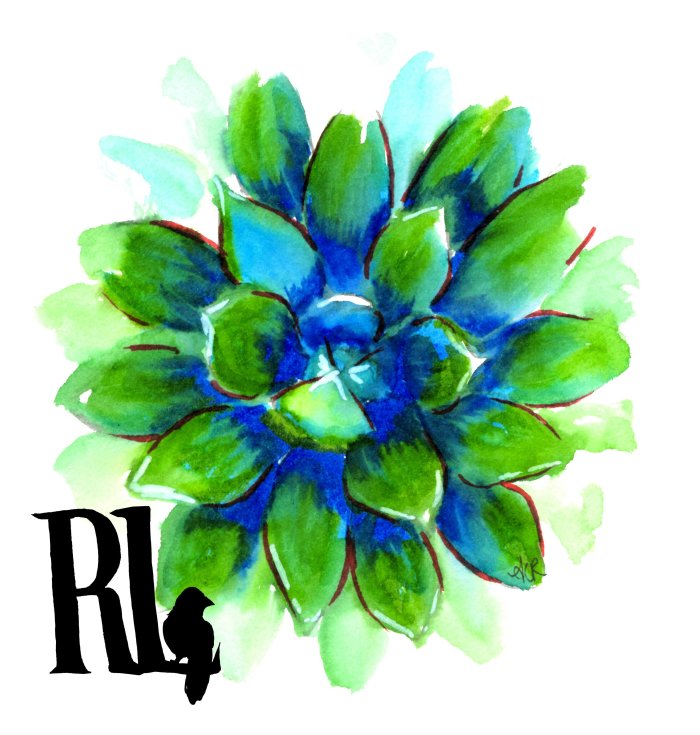
I feel woefully inadequate. It has taken me forever to render a succulent that
I actually felt proud of. But, I did! Finally. I’ve managed a little better with
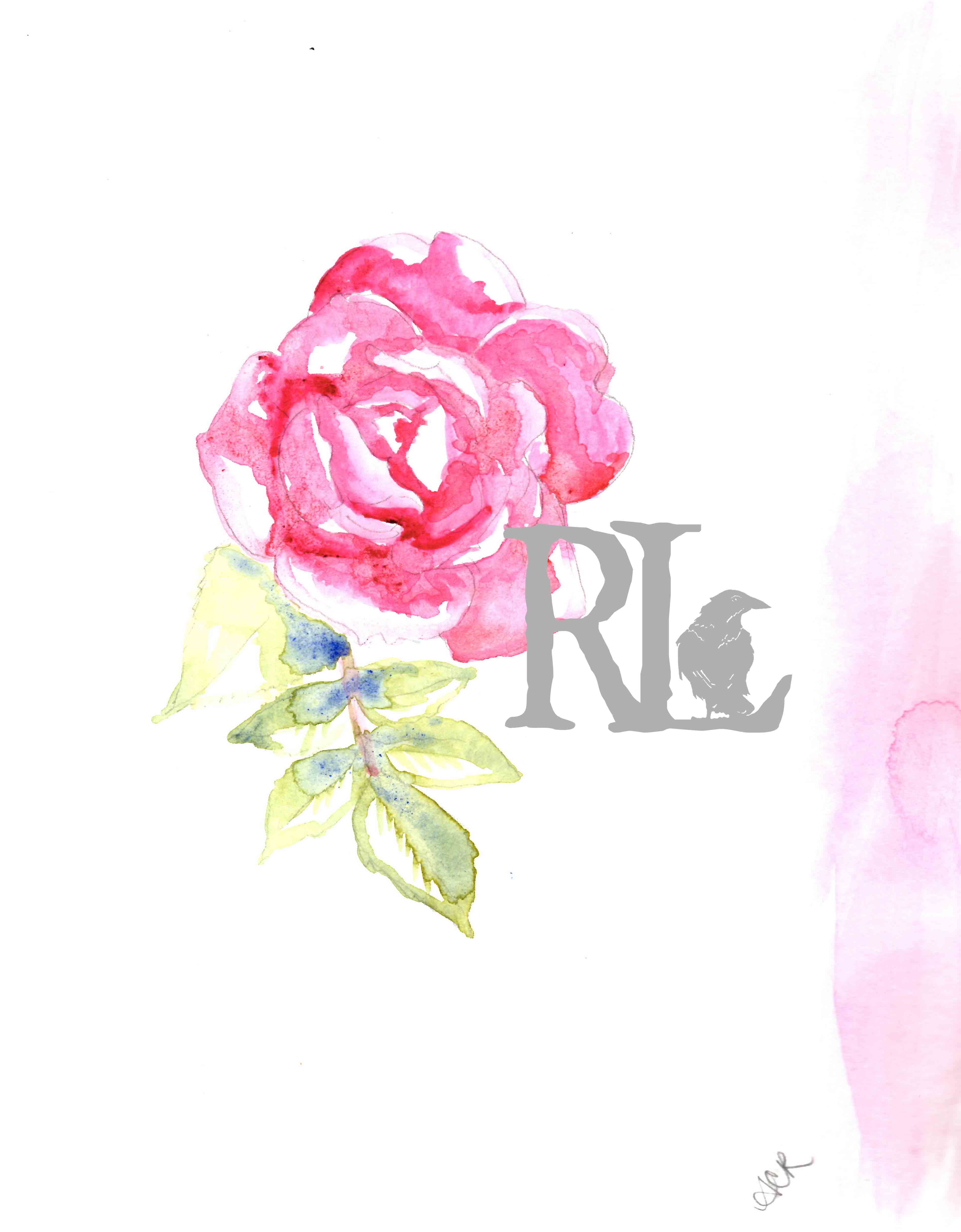
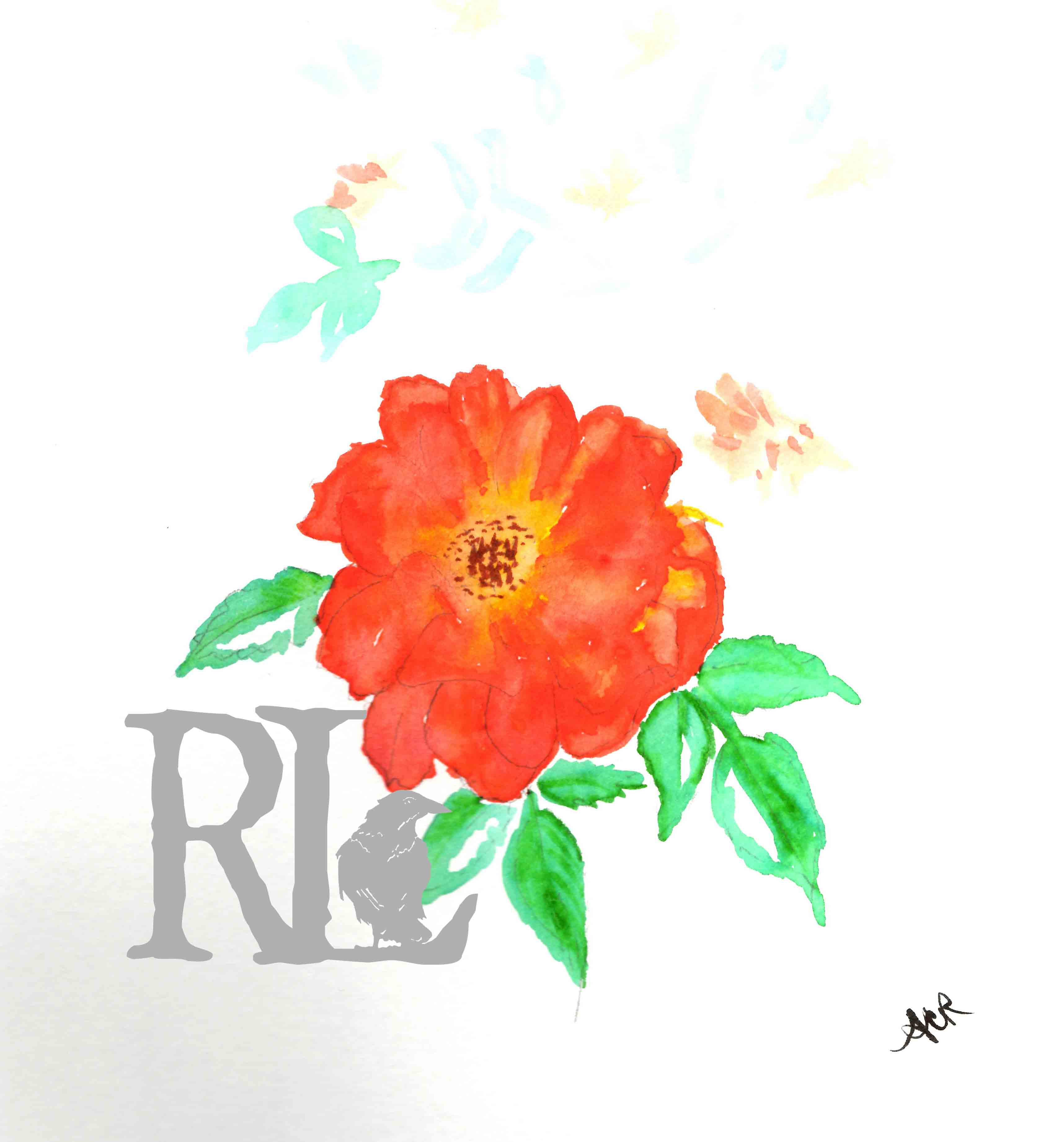
roses, but I’ve been at roses longer.
I guess that’s a huge part of both gardening and painting, you just have to keep practicing, keep training the eye, keep trying. And…possibly read the instructions.
(A number of these pieces are for sale on Redbubble)
I don’t know who started it, but I belong to a family of
birders. Compared to a truly avid birder, we aren’t, but compared to the folks
who aren’t sure what a robin is, we’re absolute bird nerds.
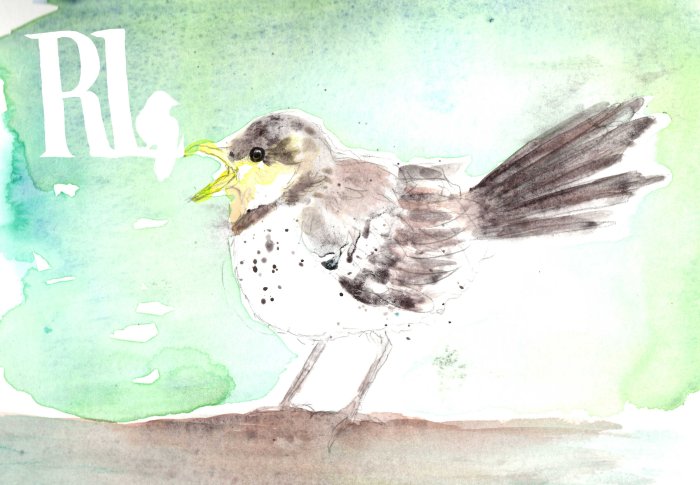
I think this is a wren. I should have written it down.
Growing up, we had a couple blue bird houses in back and a
hummingbird feeder hanging off the deck. But my grandparents maintained a
monstrous contraption of a bird feeder, with suet, thistle, sunflower, and
probably a couple other extensions. My grandfather had a longstanding contest
with the local squirrels, but unlike me he was actually pretty successful in
building baffles to keep the little moochers off. It wasn’t until recently that
the trees had gotten too big and too close, and the squirrels could just LEAP
directly onto the feeder.
But for years, the squirrels foraged under the feeder and
the birds fed at their appointed places and splashed in their heated (in
winter) birdbath.
My Grandparents received Birds and Blooms magazine, and whenever we arrived at their house for a visit I would immediately grab a magazine and flip through the pages looking at all the spectacular, brilliantly colored, photography. I never read the full length articles, just the short little blurbs and funny stories. But oh, those pictures.
Phone calls, letters, and conversation centered on the
happenings at the bird feeder—what notable bird visited, or the time the fox
came through with a half-eaten something in his mouth, or the day the hawk
visited and ALL THE BIRDS avoided the yard for hours. I imagine, if there were
a zoologist historian at some point in the future, they would like to have my
grandmother’s letters. But given that they are all written in cursive, they won’t
be able to read them.
The aviary is my favorite part of the zoo, and I always try
to stop and listen to the birds, even though I have only the barest grasp on
which birds I’m hearing. Now that I’m grown and have a house of my own, I have
a sunflower seed feeder.
I hang it off a tree branch I can reach from my deck, so I
had no illusions about keeping the squirrels off—though I do throw cups of
water at them sometimes when I feel like they’ve been on the feeder Every
Single Time I’ve been out there.
I don’t mind at all when the cardinal in the tree outside my
bedroom window scolds loudly because the feeder is empty. I love watching the
housefinches, chickadees and the occasional titmouse pigging out on the feeder.
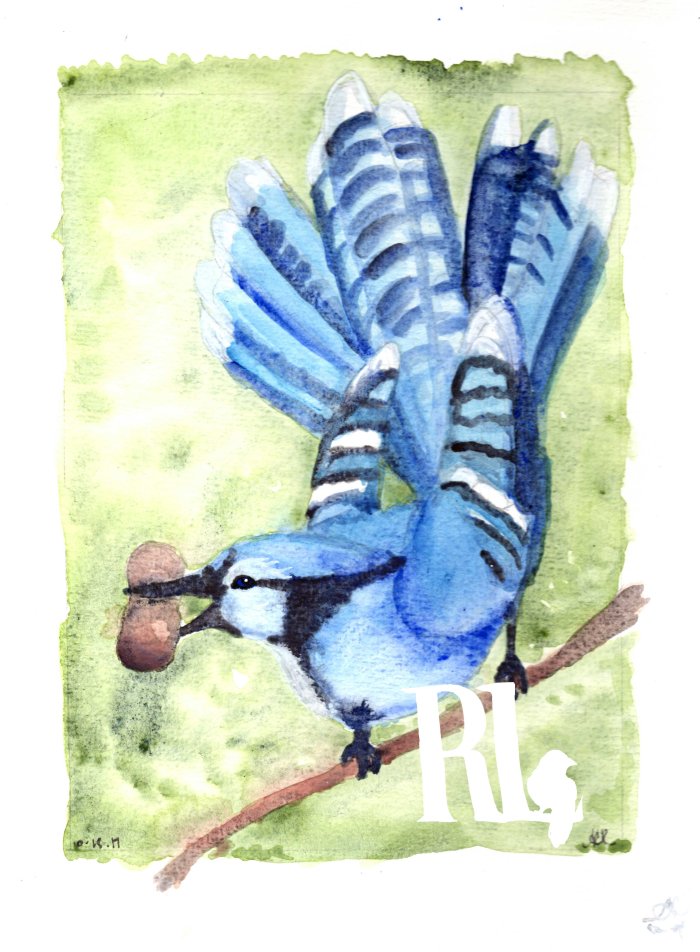
Blue Jay (those Jays…)
After a lifetime of drawing horses, I was surprised to find an
affinity for birds. I really love painting birds, and half the time I really
love how the paintings come out. I attribute it to the hours and hours I spent
poring over Birds and Blooms, staring at breathtaking hummingbirds, titmice,
tanagers, orioles, chickadees, bluebirds (east and west), blue jays (east and
west)…of course, the more shy, insect eating birds I know essentially nothing
about (there are armies of wrens and warblers and sparrows that I’m only seeing
now because I have an uncle and an aunt who are Real Avid Birders with a Really
Nice Camera).
I’ve started to experiment with different looks and feels
for my bird paintings, and will probably start asking various wildlife and
raptor rehabilitation centers if they are interested in having a piece to auction.
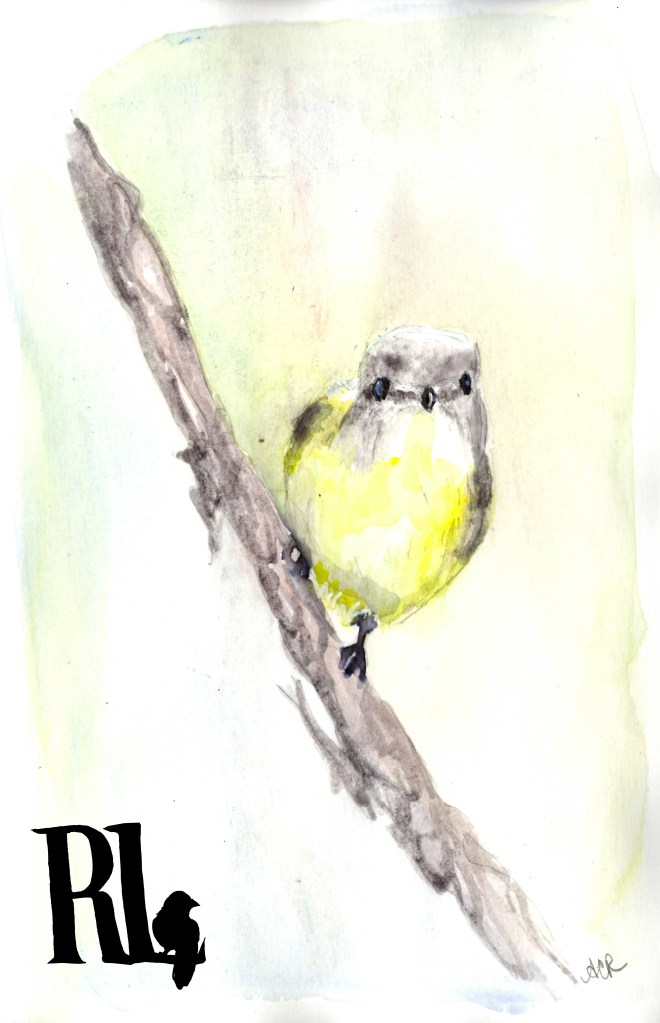
What about you? Do you bird watch? Or are birds those mysterious avian monsters from that Hitchcock movie? Which of these birds did you like best and want to see in the Etsy shop? (The Blue Vireo is already there)